
Primary source: Namma11 Fantasy Desk evergreen workflow explainer, built on the assigned hub intent (fantasy cricket tips today captain vice captain picks probable XI pitch report contest strategy) and cross-checked against the public Namma11 fantasy tips guide. All match examples below are hypothetical.
Which captain pick is actually the right one tonight? The honest answer is that the captain question only makes sense once the rest of the read is in place. Fantasy cricket tips that arrive as a list of three names, with no read on the surface, the toss, the bowling match-ups or the contest type, give the reader a feeling of being helped without giving them a way to defend the pick. The workflow below puts the read before the names.
It is the same logic a serious investor uses when sizing a position: read the market first, read the asset next, decide the position last. Translated into fantasy terms, that means four ordered steps a reader can run on a phone in twenty minutes before the toss lands.
The four-step match-day read
Match-day workflow in the order it actually works
- Read the pitch report and dew window first. Surface, square boundary sizes, expected pace or spin hold, and whether the evening game is likely to turn into a chase.
- Lock the probable XI for both teams. The team sheet decides which players are even in the pool. A captain pick that is not in the playing XI scores zero.
- Choose captain and vice-captain after the toss, not before it. Toss result, confirmed XI and the impact-player call change the math on who actually scores.
- Pick the contest type that fits the read. A high-variance pitch warrants a contrarian mega contest. A settled surface warrants a head-to-head or a small league where consistency wins.
Reading the pitch report before picking any name

The first decision is not who to captain. It is which scoring pattern the night is likely to reward. Indian grounds fall into a small number of broad buckets, and once the bucket is fixed the captain pool shrinks on its own.
Flat batting tracks with short square boundaries tend to produce 180-plus totals, so the points sit with top-order batters and death-overs specialists on both sides. Pace-and-bounce tracks with longer square boundaries reward fast bowlers and seam-bowling all-rounders. Dry, turning tracks push the points towards spinners and batting all-rounders who bowl ten overs. The exact bowl-by-bowl sequence is not predictable, but the broad category almost always is.
Two extensions matter before the toss. First, the dew window. A night game with a heavy dew forecast is usually a chase: the ball comes onto the bat in the second innings and spinners lose grip. Second, square boundary dimensions. A ground with shorter square boundaries than straight ones tilts captain maths back to the top-order. A symmetrical ground keeps middle-order batters in the conversation. None of these signals need a paid subscription; they are visible in the standard pre-match notes any fantasy platform publishes.
Probable XI: the team sheet that decides your pool
A captain pick is only meaningful if the player is in the playing XI. The probable XI sounds routine but it is the step most casual users skip. A captain who is rested, dropped, or listed but not in the final eleven is worth zero. So is a captain whose team has been told an hour before the toss that the surface does not suit a particular bowler.
The narrow list to lock at this stage has three columns: certain starters, likely starters, and toss-time decisions. Certain starters are not being rotated and not returning from injury. Likely starters depend on combination choices (extra spinner versus extra seamer based on the pitch). Toss-time decisions include the impact-player call and any late fitness check. The probable XI for both teams should be visible twenty to forty minutes before the toss for almost every match.
Two cross-checks tighten the read. First, the head-to-head pattern between the two sides in the last two seasons. Some teams have a structural match-up that survives individual form changes. Second, venue-specific roles. A team that uses three spinners at home may go with two seamers and a part-time option away. Both cross-checks are visible on public broadcaster pages and on the team-specific pages Namma11 already maintains.
Captain and vice-captain, after the toss
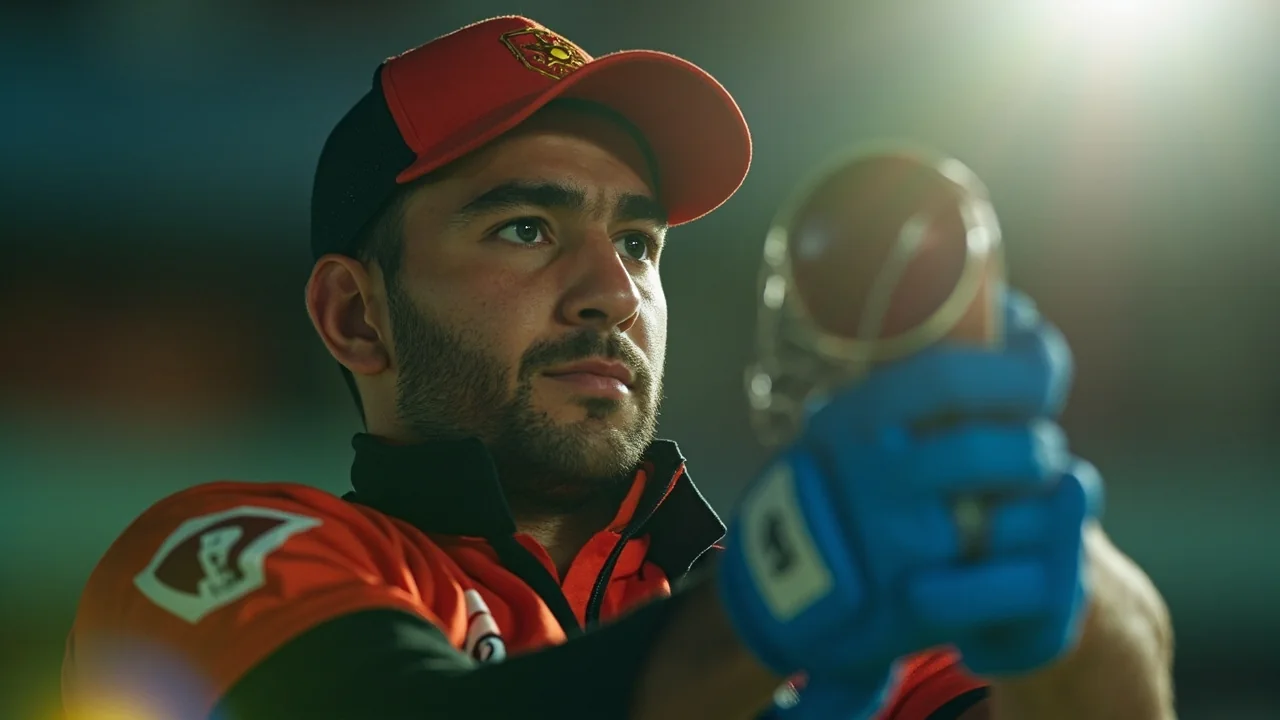
The captain decision is the highest-leverage call in the team. Fantasy scoring multiplies the captain's points and the vice-captain's points by a fixed factor, which means a wrong captain call can drop a well-built team twenty thousand ranks in a mega contest. That is why the captain pick comes last, not first.
Three filters run together at this stage. The first is role fit: which players in the probable XI are likely to bat or bowl in the phase the pitch report says will carry the points. The second is recent form: a player with three or more strong recent innings or spells beats a name who is famous but quiet. The third is match-up: some bowlers have a record against a particular opposition that survives surface changes. Picking a captain who clears all three is rare. Clearing two is the realistic target on most nights.
The vice-captain pick is the safety net for the captain pick. A common pattern is to captain the higher-upside player and vice-captain the lower-upside, higher-floor player from the same team. If the captain scores zero, the vice-captain's multiplier still rescues a usable total. The reverse pattern, both captain and vice-captain from the same high-risk profile, doubles the downside without doubling the upside.
One decision that should not be made here is the captain pick without a confirmed XI in front of you. Picking a captain before the toss, when the team sheet is still probable rather than confirmed, is the most common single mistake in casual fantasy.
Contest strategy that matches the read
The contest lobby is the last screen, not the first. A team that fits a flat batting track will perform differently in a 100,000-entry mega contest than in a five-entry private league with friends. The role of the contest type is to match the team you have built to a structure that pays out the way your team is built to score.
A team built around one or two high-variance differentials (low selection rate, high ceiling) belongs in a contest that rewards ceiling: mega contests, with their long-tail payout structure, do that. A team built around consistent performers from strong teams belongs in a contest that rewards consistency: head-to-heads, small public leagues with five to ten per cent win odds, or private leagues with friends. Same team, different contest, very different result.
Multi-entry is a separate decision. Most serious fantasy users run two or three team variations in a single mega contest: one safe team on consistent names, one moderate team with two or three differentials, one contrarian team with five or more differentials and a low-selection-rate captain. Without multi-entry, the variance of a single mega-contest entry tends to consume the team even when the read is right.
What fantasy cricket tips cannot fix
- A tip without a pitch report is a guess dressed as analysis.
- A captain pick without a confirmed XI is a tip that can return zero.
- A "best contest" recommendation without naming the entry size and structure is a recommendation about a screen, not a strategy.
- A differential pick that ignores venue, opposition and role is a random low-selection captain whose ceiling and floor are both unknown.
None of the four steps replaces reading a specific match preview or listening to a broadcaster's notes on a particular game. They are the framework the preview fits into. A preview that contradicts the framework deserves a second look; a preview that adds colour to it is the right kind of input. The framework is also what lets a reader reject a tip that conflicts with the obvious signals.
What to watch between now and the next toss
The next hard checkpoint for any reader running this workflow is the next toss on a match they are planning to play. Read the pitch report first. Lock the probable XI second. Choose captain and vice-captain third. Pick the contest type last. If any of the four steps changes during the day (a team announces a late change, the weather shifts, a player is scratched from the XI), restart from step one rather than patching a single decision.
The workflow is what makes a tip useful rather than decorative. A tip that lands inside a frame the reader has already drawn turns into a decision; a tip that arrives without the frame turns into a feeling.