Primary source: Probuddha Bhattacharjee, Hindustan Times, “Kohli-Gambhir’s heated moment from IPL recalled by umpire Anil Chaudhary: ‘There’s a limit, it should not be crossed’,” 3 August 2026. Cross-checked against JioHotstar’s IPL coverage. Match-day reporting for IPL 2026 sits with Namma11 cricket news.
Anil Chaudhary has stood in Tests, ODIs and T20 internationals across a long Indian home season, but when the JioHotstar IPL archive crew asked him to revisit a single night from the league’s early years, he reached for one match in particular: Royal Challengers Bengaluru versus Kolkata Knight Riders at M Chinnaswamy Stadium on 11 April 2013. The two captains on that evening were Virat Kohli, leading RCB, and Gautam Gambhir, leading KKR. The exchange between them after Kohli’s dismissal briefly stopped the chase and set the template for almost every Kohli-Gambhir flashpoint that followed.
The retelling is candid about what Chaudhary saw and what he expected. “I knew something like that would happen because all of them from the North play with aggression… there’s a limit, and it shouldn’t be crossed,” he said on JioHotstar, framing the night as the kind of flare-up a senior umpire learns to read rather than fear. The line draws a clear boundary between competitive fire and personal needle, and Chaudhary uses it to explain why he managed the situation rather than punish it in real time.
How the Chinnaswamy night unfolded
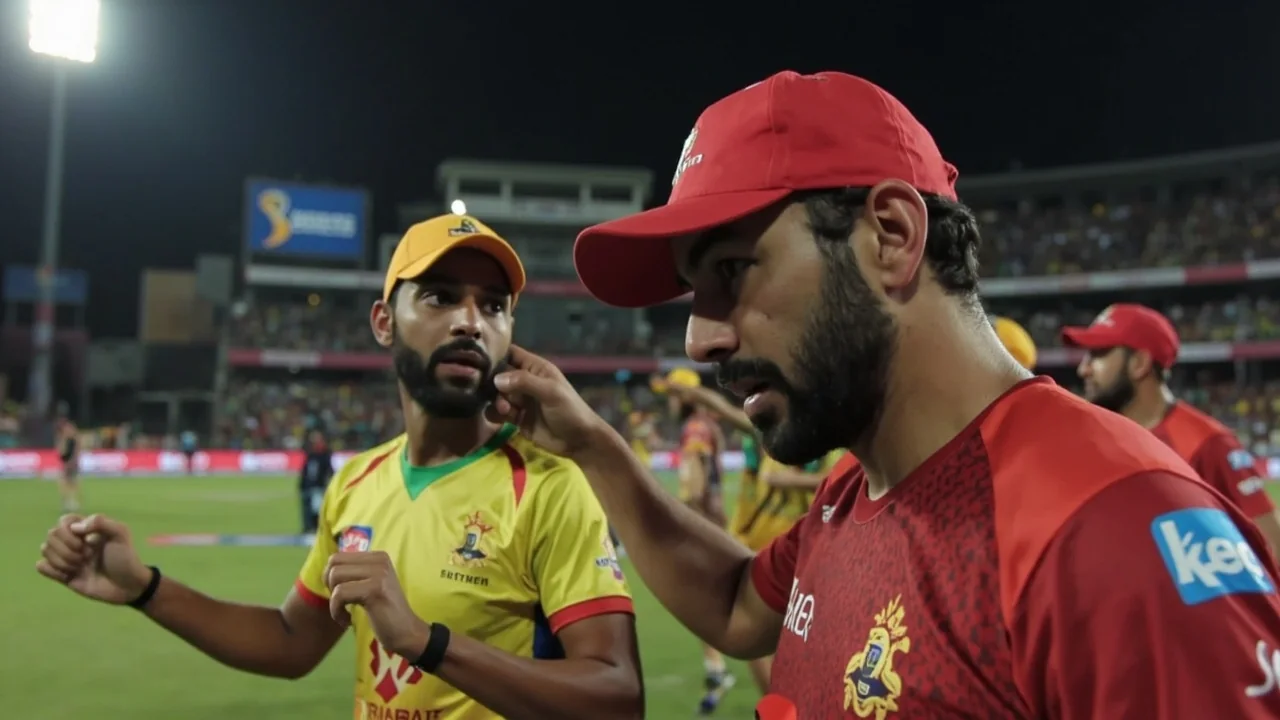
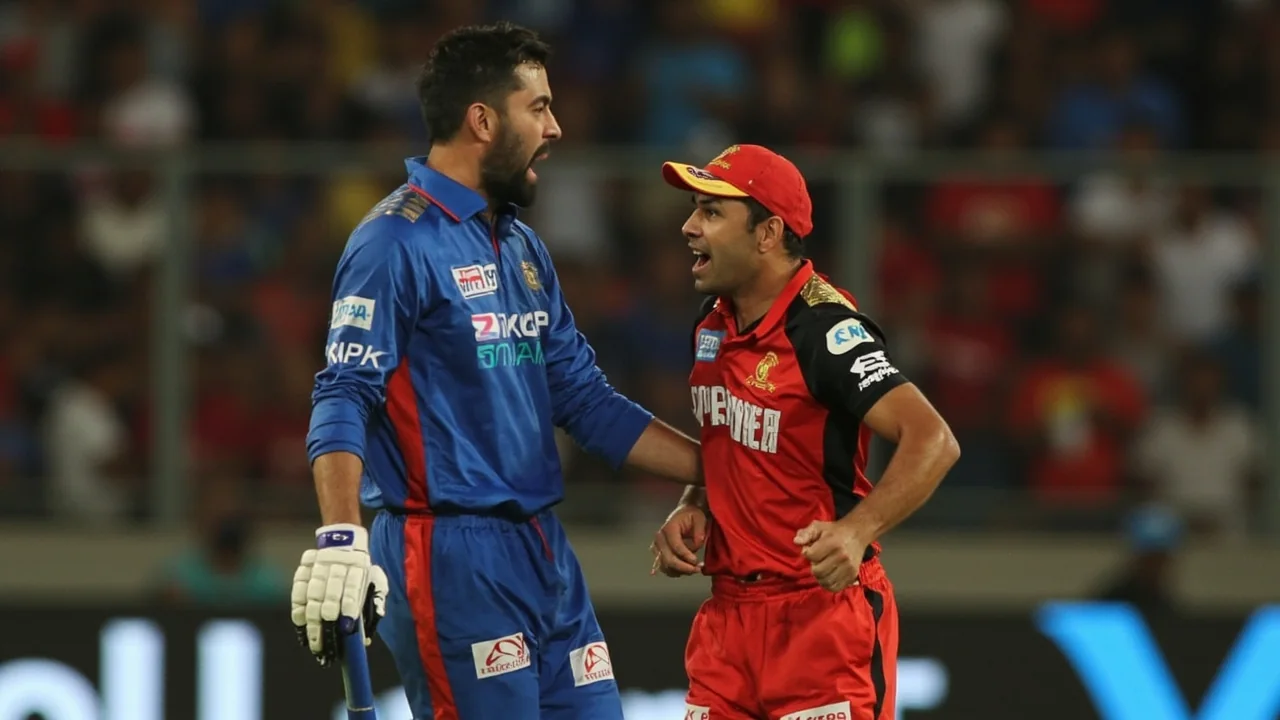
RCB were chasing against KKR at Chinnaswamy, a venue that has historically rewarded bat-first decisions under lights. Kohli was at the crease during the run chase, and the dismissal was the trigger. As he walked off, words were exchanged with Gambhir, who was fielding in the inner ring. Kohli turned back toward Gambhir, the two moved closer, and the matter was on the verge of becoming something more serious before players and match officials separated them.
Chaudhary was one of the two on-field umpires that evening, positioned close enough to hear the exchange clearly. In his JioHotstar recollection he describes a short, sharp confrontation rather than a sustained brawl — the kind of moment that travels across the ground in seconds and reaches broadcasters before the next ball is bowled. The umpires stepped in, the players separated, and the match continued, but the clip travelled widely that night and stayed in circulation long after the result was filed.
Match context at a glance
- Fixture: Royal Challengers Bengaluru vs Kolkata Knight Riders, IPL 2013
- Venue: M Chinnaswamy Stadium, Bengaluru
- Date: 11 April 2013
- RCB captain: Virat Kohli
- KKR captain: Gautam Gambhir
- Trigger: Words exchanged as Kohli walked off after his dismissal in the RCB chase
- On-field officials: Anil Chaudhary was one of the two standing umpires
What the umpire’s account adds is a layer the broadcast cameras usually miss: the sense that some confrontations are easier to defuse because both players are known quantities. “Actually, my advantage with Virat was that I had officiated his matches since childhood, so I have known him for a long time. He doesn’t have any malice,” Chaudhary told JioHotstar. The line is important because it shifts the conversation from hostility to familiarity — two Delhi cricketers who learned their cricket in the same circuit and crossed paths often enough that an umpire knew exactly how to read the temperature.
Why Chaudhary framed it as a Delhi-cricketers question
The “all of them from the North play with aggression” line is not a dismissal of either player. It is a regional and cultural read of where the heat comes from. Delhi’s club and age-group cricket has long produced cricketers who back themselves, speak back when spoken to, and treat silence as weakness. Gambhir, who grew up in the Najafgarh belt of Delhi, and Kohli, who came through the West Delhi Cricket Academy and the Under-19 system, are two of the most visible examples of that culture to wear the India cap.
Chaudhary’s point is that an umpire who has worked Delhi cricket long enough sees the pattern early. The same body language, the same willingness to stare down a batter or a captain, the same instinct to respond rather than retreat. He is not excusing the behaviour; he is saying that an experienced official reads it as competitive heat rather than personal malice, and matches his response accordingly. The limit he keeps returning to — “there’s a limit, and it shouldn’t be crossed” — is the line between those two readings.
That distinction matters because it shaped how the umpiring team handled the rest of the match. Once the initial flare-up was over, the game continued without a public warning or a formal report that would have triggered an IPL code-of-conduct hearing at season end. The footage from the broadcast truck had already done its work; the on-field decision was whether to add punishment to a moment that had largely burned itself out.
The 2023 rematch and how the picture changed
The Kohli-Gambhir story does not end in 2013. A decade later, on the IPL 2023 circuit, the two men crossed paths again — only this time the cards had been thoroughly reshuffled. Kohli was still leading Royal Challengers Bengaluru; Gambhir was back in the IPL ecosystem as the mentor of Lucknow Super Giants. The first flashpoint came when Kohli exchanged words with LSG pace bowler Naveen-ul-Haq after the RCB chase was finished, and the second came at the traditional post-match handshake, where Kohli and Gambhir came together and had to be separated by support staff and ground officials.
The 2023 sequence mattered because it changed the stakes. The 2013 flare-up was between two captains of equal standing in their own franchises; the 2023 clash involved a current playing captain and a former India opener turned mentor. The heat was similar, but the optics were different. Chaudhary’s 2013 read — Delhi cricketers, competitive aggression, a clear limit — became the lens fans and commentators used to make sense of a moment that, on its face, looked like personal dislike.
Both men have spoken, at various points in the years since, about how the relationship has settled. The Hindustan Times report frames the public relationship as improved, with Kohli continuing to represent RCB in the IPL and Gambhir serving as India’s head coach. That is a sharp re-positioning of two men who once stood on opposite sides of a Chinnaswamy flashpoint, and it is part of why the Chaudhary interview lands in August 2026 as more than a retro feature: it offers a framework for reading the next time the cameras cut to a face-off between two senior India figures.
What Chaudhary actually saw from the middle
Umpires rarely get to narrate the part of an IPL match that the broadcast cameras miss. Chaudhary uses the JioHotstar slot to do exactly that, and the details are useful for anyone who has watched a Chinnaswamy night from the stands or the couch. The exchange was short, the participants were separated within seconds, and the game resumed without a formal stoppage. The longer impact was in the dressing rooms, where captains on both sides had to manage a player’s temperature in real time.
For fantasy and team-building readers, the on-field story sits underneath a more practical question: how much does a captain’s temperament affect selection? The honest answer is that it has always mattered. RCB’s bowling plans, KKR’s field settings and the way each captain used DRS reviews in 2013 were all shaped by the same competitive culture that produced the on-field flashpoint. An umpire’s calm reading of that culture is what kept the match flowing; a player’s inability to read the same culture is what produces the long-running feuds.
Chaudhary’s framing also offers a way to think about modern IPL flashpoints. The league has changed in size, broadcast reach and the volume of franchise rivalries since 2013, but the underlying pattern — senior players backing themselves in the heat of a chase, an umpire deciding in real time whether to sanction or separate — has not. The IPL’s match officials and code-of-conduct officers still rely on the same on-field read Chaudhary describes.
What the recall means for IPL 2026
Three things sit on top of the Chaudhary interview for anyone tracking IPL 2026. First, the historical lens. The Chinnaswamy night is now part of the league’s official oral history, narrated by an umpire who was there and has the credibility of a long international career behind him. That matters for the way future flashpoints are framed, because the most-cited IPL confrontations of the last decade are all read against this kind of primary recall.
Second, the modern-day alignment. With Gambhir in the India head coach’s chair and Kohli still central to RCB’s batting order, the two men now sit on different sides of the India dressing room door rather than different sides of an IPL coin toss. The 2013 story reads almost as a character sketch of how two senior India figures came up; the 2026 reading of that story is about how the relationship has matured into a working professional partnership. Chaudhary’s “they don’t have any malice” line lands harder in that context.
Third, the broader umpiring lesson. The line between competitive fire and personal needle is something every match official has to draw in real time, and the Chaudhary account is unusually explicit about how he drew it. The same read applies to current umpires managing the kind of senior-player confrontations that come with the IPL’s biggest fixtures — the India-captain equivalent matches, the eliminators, the games that decide playoff seeding. Watch the on-field positioning of the senior umpire at those moments; the Chaudhary approach is the one in use.
What to watch between now and the next RCB-KKR meeting
The next hard checkpoint on this story is the next time RCB and KKR share a field in IPL 2026. The fixture list sits inside the league’s wider August-to-May cycle and the post-season commentary will, in all likelihood, re-run the Chaudhary interview each time the camera cuts to a face-off. The umpire’s framing is now part of how the IPL understands its own history, and the standard he set in 2013 — read the players, know the culture, draw the line at the limit — is the standard current match officials are expected to maintain.
For readers following IPL 2026 reporting, the Chaudhary interview is worth keeping in mind every time the league’s biggest fixtures deliver a heated moment. The lesson is older than the camera angle and more useful than the highlight reel: a senior umpire who knows the players from childhood reads the situation faster than any replay, and the limit he keeps returning to is the same one the modern IPL is built around. Chinnaswamy in 2013 set the template; the next marquee fixture will be the test of whether the template still holds.
The Chaudhary quotes, on the record
Those two quotes do the work of the entire JioHotstar interview. The first is the line that has travelled furthest, because it gives the league an explicit definition of the boundary between competitive aggression and personal needle. The second is the line that explains why Chaudhary was the right umpire to manage the situation — familiarity built across age-group cricket in Delhi, applied in real time at an IPL fixture. Together they explain why the 2013 night ended without a formal sanction and why the memory of it has stayed in the league’s broadcast archive for more than a decade.
The Hindustan Times report that surfaced the interview was filed from the press box on the evening of 3 August 2026, bylined by Probuddha Bhattacharjee at 18:19 IST and updated a minute later at 18:20. The piece sits inside a wider IPL 2026 reporting cycle that has the league approaching the back end of its season, and Chaudhary’s recollections are part of the broadcast build-up to the marquee fixtures still to come. Follow the next IPL bulletin and the IPL 2026 match calendar as the season moves into its closing stretch and the next RCB vs KKR fixture lands on the schedule.