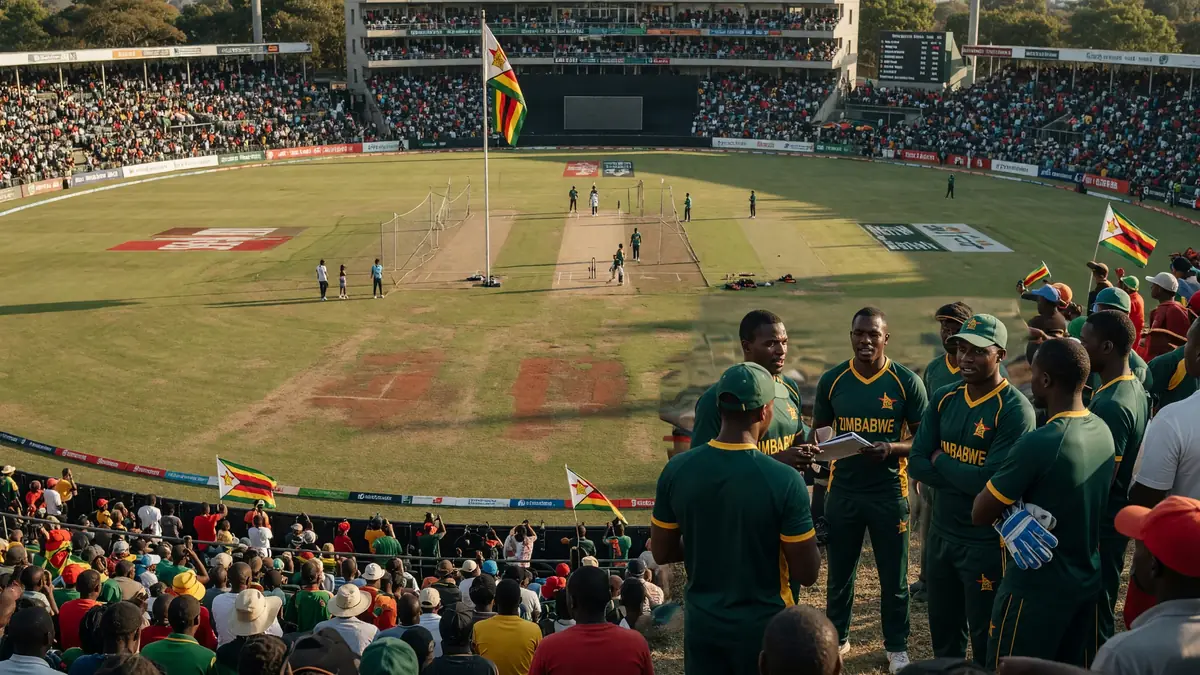
Primary source: Times of India Sports Desk, “Zimbabwe announce T20I squad for India series, Tafadzwa Tsiga earns maiden call-up,” 22 July 2026. Related match reporting sits with Namma11 cricket news.
Zimbabwe’s T20I selection for India is best read as a set of competitive choices, not a ceremonial roll call. The panel named a 15-player group for a three-match home assignment in Harare and used those berths to force live contests at the crease, with the ball and in the all-rounder band. Uncapped wicketkeeper-batter Tafadzwa Tsiga received a first T20I call-up after 10 Tests already on his record. Wessly Madhevere and Newman Nyamhuri were restored. Clive Madande, Tinotenda Maposa and Tashinga Musekiwa were left out. Sikandar Raza stayed captain.
That package matters immediately because the calendar is ruthless. The matches fall on 23, 25 and 26 July in the same city, so selectors have built a squad that can absorb a failed powerplay, a keeping reshuffle or a seam injury without recalling outsiders mid-series. The public list is less a finished XI than a menu of trade-offs the coaching staff must settle before the first toss.
Keeper contest: Tsiga arrives, Marumani remains
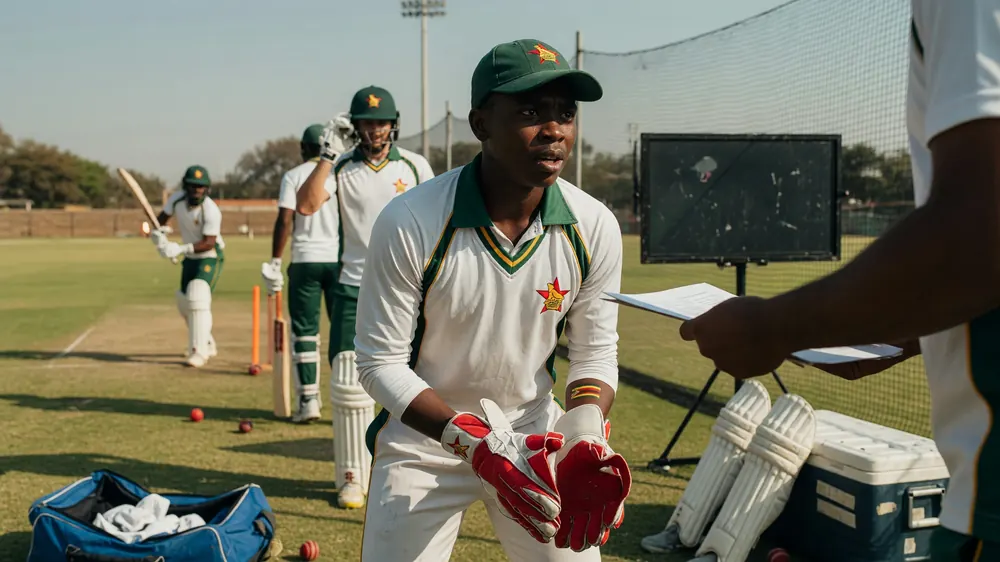
The sharpest internal story is gloves. Tadiwanashe Marumani is still listed as a wicketkeeper in the same squad, so Tsiga’s call-up expands options rather than automatically ending an incumbent’s run. Selectors appear willing to weigh red-ball composure and glovework reliability against the different tempo of T20 batting and the need for sharp work standing up to spin.
Tsiga’s profile is unusual for a white-ball debutant. Many keepers enter T20 internationals through domestic franchise form; he arrives with a substantial Test sample and no prior T20I cap. Against India, that can cut both ways. Longer-format patience can steady a chase if the middle order is exposed early, yet the same temperament can look underpowered if Zimbabwe need a 20-ball counterattack in the powerplay.
Match-day questions follow from that tension. Does Zimbabwe want one keeper who bats high, or two gloves-capable batters with one used purely as a specialist bat? Does the staff prefer a left-right middle-order mix that only appears if both named keepers are in the XI? Across three games in four days, the dual listing also acts as injury insurance. A bruised hand in the opener need not collapse the rest of the series plan.
Until the first toss sheet is public, the honest reading is competition, not coronation. Tsiga’s maiden call-up is a selection statement; starting status remains a separate decision that can change game to game if strike rates or glove errors intervene.
Pace stocks: Nyamhuri’s return and Chivanga’s retained claim
Fast-bowling depth is the second contested zone. Newman Nyamhuri is back after an injury that ruled him out of part of the Bangladesh ODI series. Tanaka Chivanga, who filled that gap and impressed, has not been discarded to make room. Blessing Muzarabani and Richard Ngarava remain available as established seam pillars, with Brad Evans adding another multi-skill seam option.
That cluster creates a genuine powerplay and change-up puzzle. Two of Muzarabani, Ngarava, Nyamhuri and Chivanga will likely own the new ball on most nights, while a third seamer or Evans may handle middle-over hard lengths. Retaining Chivanga alongside Nyamhuri’s recall tells you the panel liked the replacement’s returns enough to keep both live rather than treat the injury cover as temporary only.
For a home series against India’s batting depth, early wickets are not a luxury item. A side that leaks 55 in the powerplay rarely recovers across a short series. Zimbabwe’s seam group therefore has to deliver both wicket-taking lengths and a Plan B of cutters and hard-into-the-wicket overs if the ball stops swinging. The selection does not invent those skills; it simply gives Raza more bodies who have already been trusted in recent white-ball work.
Workload management sits under the surface. Three matches in four days punish any attack that leans on two names alone. Having Nyamhuri and Chivanga available together lets the staff rotate without thinning the bench to specialist batters only.
Multi-skill balance and the three omissions
Wessly Madhevere’s return to the T20I side—his first since July 2025—fills a different gap. He stayed active in Tests and ODIs against Bangladesh, so this is a format switch rather than a cold recall. His known brief is middle-order batting plus off-spin overs that can cover the middle phase when the seamers need a rest or a right-hand match-up appears.
Around him sit other dual-role names already central to Zimbabwe’s white-ball identity: Raza himself, Ryan Burl, Brad Evans and Wellington Masakadza. That concentration of multi-skill players is how a 15 can still field five bowling options without collapsing the batting order. It also explains the opportunity cost of the omissions. Clive Madande, Tinotenda Maposa and Tashinga Musekiwa make way; the Times of India report does not attach long public justifications to each exit, so the clean reading is role fit for a three-match India burst rather than a career verdict.
Madhevere’s inclusion hardens one tactical lever in particular: spin through the middle. If he is trusted for three or four overs, Raza gains a softer transition from powerplay seam to death bowling. If he is picked primarily as a batter who bowls only match-up overs, the XI becomes thinner in control phases and more dependent on Masakadza and part-timers. That binary will show up on the team sheet more clearly than any pre-series soundbite.
Batting flexibility beyond the all-rounders still matters. Brian Bennett, Ben Curran, Dion Myers and Milton Shumba give selectors several left-right pairs and top-to-middle pathways. None of those names freezes a batting order on paper; they simply prevent the side from becoming a specialist-heavy list that collapses when one opener fails.
Leadership continuity after Bangladesh’s mixed ledger
Raza keeps the armband after a busy multi-format block against Bangladesh in which Zimbabwe won the one-off Test by an innings, took the ODI series 2-1 and lost the T20I series 2-1. The leadership decision therefore sits on uneven but not broken evidence: strong longer-format results, a competitive if unfinished short-format chapter.
Against India the captaincy job shifts from result narratives to role clarity. Who bowls the first over? Who owns the 17th to 20th? Which batters are licensed to take the new ball on if the required rate spikes? Raza’s own bowling remains part of the answer whenever he is fit enough to deliver a full quota, because a senior all-rounder captain effectively adds a fifth bowling option without sacrificing a middle-order slot.
Continuity also lowers noise inside a short series. With Tsiga’s debut pathway and two seam recalls already creating internal competition, changing captaincy on top would have multiplied uncertainty. The panel chose to open contests in roles while locking the decision-maker.
How the 15 is built
Zimbabwe T20I squad v India
- Sikandar Raza (captain)
- Brian Bennett
- Ryan Burl
- Tanaka Chivanga
- Ben Curran
- Brad Evans
- Wessly Madhevere
- Tadiwanashe Marumani (wk)
- Wellington Masakadza
- Blessing Muzarabani
- Dion Myers
- Richard Ngarava
- Newman Nyamhuri
- Milton Shumba
- Tafadzwa Tsiga (wk)
Read as architecture rather than a ranked list, the squad is dual-role heavy. Seam depth runs through Muzarabani, Ngarava, Nyamhuri, Chivanga and Evans. Spin and slower control sit with Masakadza, Madhevere and part-time options from the batting unit. Two keepers share the gloves-and-bat conversation. The top and middle order supply enough interchangeable pieces to chase or set without a single rigid template.
That construction fits a one-venue sprint. Travel friction is low, recovery windows are short, and local length knowledge can be reused. Depth is therefore not decorative; it is how Zimbabwe stay competitive if game one exposes a mismatch.
Opponent pressure that shapes those choices
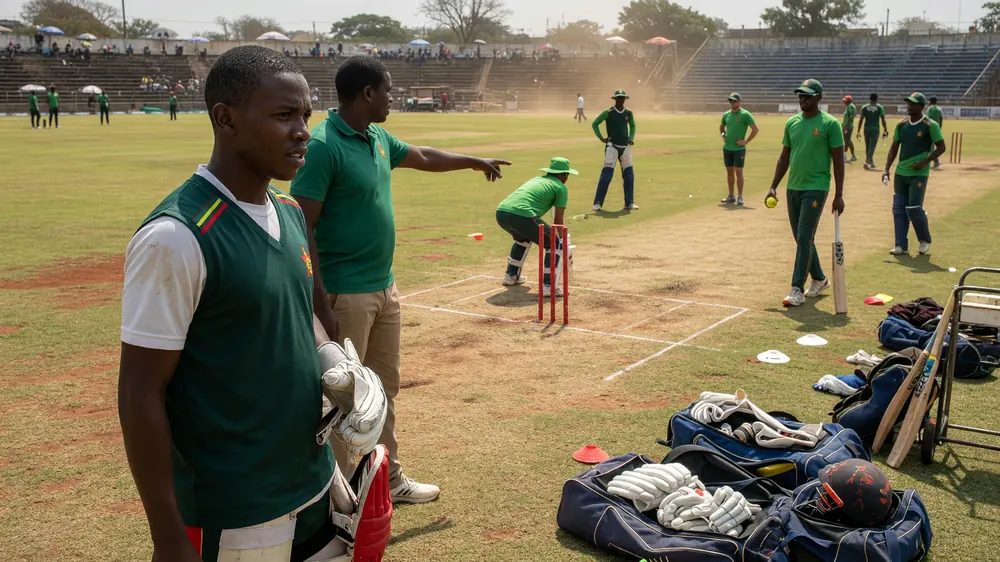
India enter the Harare leg as reigning T20 World Cup champions, which still frames the hierarchy of the contest. The same report notes recent defeats in Ireland and England, a reminder that even deep squads can leak results in transitional combinations or on unfamiliar surfaces. For Zimbabwe’s selectors, that dual picture justifies both caution and ambition: the visitors remain favourites on pedigree, yet not an abstract force immune to early pressure.
The sides last met in the T20 World Cup Super Eight, where India won by 72 runs after Zimbabwe had earlier beaten Australia to reach that round. Historical scorelines do not lock future outcomes, but they do set the quality bar Zimbabwe’s new combinations must clear. A debutant keeper, a returning seamer and a restored spinner-batter will be judged against that standard within a few overs, not across a long home summer.
Practically, Zimbabwe’s selection leans toward control points rather than mirror-image power hitting. Early wickets with the new ball, middle-over squeeze through spin and cutters, and death bowling that can defend a modest total are more realistic pressure levers than trying to outscore India for 40 overs across three nights. Madhevere’s overs, the expanded seam pool and a stable captain fit that theory more cleanly than a specialist-only batting list would have.
First-match decision points for 23 July
Those four decisions sit on top of fitness checks, especially for the fast bowlers returning from or covering injury cycles. Because the second and third T20Is follow on 25 and 26 July, any choice made for the opener also has a fatigue sequel. A seamer who bowls at both ends of game one may need different support roles later in the week even if form is strong.
Fantasy and match readers do not need a leaked XI to track value. Watch whether Tsiga is named in the playing group or held as cover; whether Madhevere’s overs are pre-planned or reactive; and which two seamers share the first six. Evans and Burl remain classic “minutes” players whose fantasy relevance rises only when their bowling quota or batting slot is secure. Bennett and Curran signal top-order intent. Myers and Shumba live in the flexible middle where match-ups decide inclusion.
One strong individual night can still dominate a three-match narrative. A debutant keeper who scores a brisk thirty, or a returning seamer who takes early wickets, will shape the series story faster than season-long averages. Treat each Harare fixture as its own evidence set rather than assuming the first combination freezes for all three games.
What is locked, and what is not
What is locked: a 15-player Zimbabwe squad, Raza’s captaincy, Tsiga’s maiden T20I call-up, Madhevere and Nyamhuri’s returns, three named omissions, and a Harare triple-header on 23, 25 and 26 July. What is not locked: the first XI, the keeping split on the night, the new-ball pair, or India’s final combination closer to the toss.
The next hard checkpoint is therefore the opening T20I in Harare on 23 July. Until that team sheet appears, the selection message stays consistent—stable leadership, restored multi-skill cover, live competition for gloves and pace, and a squad built for a short home sprint against the world champions rather than a long experimental tour.